Thursday, February 28, 2013

Making Use of Tech in Class


Christian Martinez
ENG 113b
Prof. Lawson
2/26/13
Making Use of Tech in Class
Schools today should start utilizing modern technology in the classroom to not only help students learn in a faster pace but also to get students used to using technology in an early age. Incorporating technology in the classroom has many benefits, such as preparing elementary and middle school students by teaching them how to use computers and the Internet so that by the time they get to high school they will already know all the basics. If the internet and other technology are used within the classroom it can benefit students and teachers a lot more than it can harm them.

Some teachers say that Technology will replace them. Teachers have a reason to be concerned because it is a big change and it might seem like with technology doing all of the work then teachers will be left out. Teachers that believe that they will be replaced by technology actually have it backwards, “teachers will not be replaced by technology, but teachers who don’t use technology will be replaced by those who do” (SherylNussbaum-beach). Teachers have a lot of classes to deal with and using technology will help to reduce the work load by staying organized via apps found on the internet. Usually naysayers argue that technology is distracting for students and lowers their attention spans, and others say that the internet is only for wasting time on social networks such as Facebook, Tumblr, and Twitter. Though it may be true that there is a temptation to use these social networks but instead of restricting them we should use them to our advantage and use these social networks for educational purposes (Teachers). With the help of technology students will be able to search for current information and take notes at the same time in the classroom. Professors and teachers usually spend a lot of time grading essays, and with the use of technology students can just do their essays and tests on their computers and just send it to their instructors. Peakview elementary is a good example that we should all eventually work up to following one day, “Peakview is a new school that is implementing a number of…teaching strategies…Among those strategies is the infusion of more than 80 networked microcomputers and related technology and software” (Wilson)A good example of a successful integration between technology and schools is Peakview Elementary School in Aurora Colorado.

This type of technology may not be accessible to students with low income but there are ways we can make it accessible to them. In the documentary Zeitgeist: Addendum it is explained that most of the money that the government has and is spent on is in the military (Zeitgeist). When the U.S. goes to war the first thing they cut in budgets are schools and hospitals (Zeitgeist). Instead of wasting money in the military we could be spending it on making technology accessible to every student in school. This movie explains how it’s the fault of corporations and the elite for budget cuts on Education and Health Care.

One benefit to using technology such as the Internet in schools is that students would not only learn what they need but also acquire computing skills that will be needed in the future. Teachers would be killing two birds with one stone if they would just incorporate computer use for kids into their everyday lessons. Important computer skills that one needs to know in order to get a job in today’s technology based society is to know how to use Microsoft word, PowerPoint, and Excel. These are just a few examples of what employers are looking for in an employee. It is believed that while students are developing their minds for the future “they also become active learners as they become proficient in gathering, organizing, and publishing knowledge” (Conte). Learning these skills at an early age will actually make it easier when those students are in college and need these skills every day for projects and homework. If we can make this technology accessible to students then we can just get that out of the way in the very beginning so that students don’t have to suffer in the future.

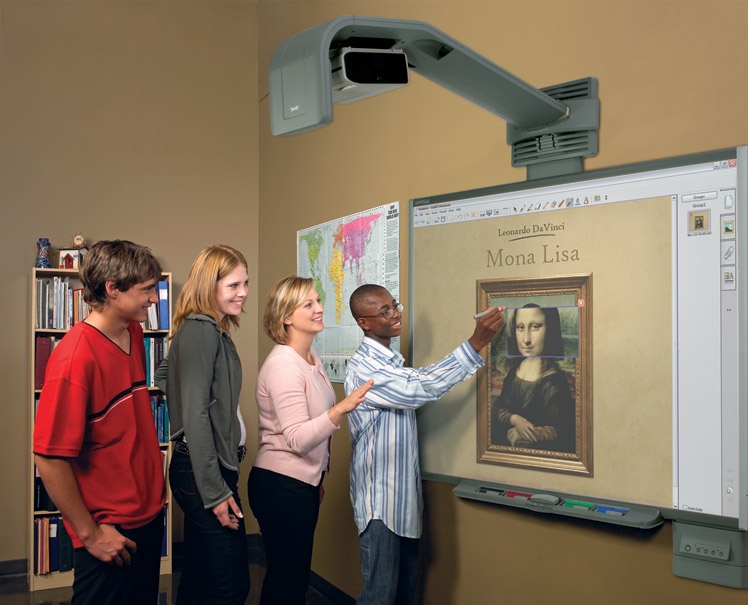
 Other technologies such as the new Smart-board that can be used to engage students in class as well as computers or laptops for example “It can store teachers’ written notes, show a video, and allow students to express their own ideas in class” (DiPardo). There are many different apps and organizers such as calendar, planners, memo pads, and even post it notes, found in the internet that can help teachers and professors keep track of what they’re doing, and with the help of technology teachers can vary the activities of the day so that students can pay attention and not be bored. There are also tablets that are specifically made for certain activities such as the nook or kindle. These can be used for reading instead of carrying heavy books on your back. Teachers can also use technology to help kids that have A.D.D by using different teaching methods and activities to keep the students engaged.

Schools should be taking advantage of modern technology and using it to help students become active learners. In today’s society it is becoming mandatory that a student knows how to navigate the web whether it’s in elementary, middle school, high school or college. We might as well just get students started on using today’s technology at an early age so that when they get older they will already be tech savvy. Teachers will always be needed for teaching positions but not in the same way as they are needed now. With technology in schools students will become super learners and will raise the standard for everyone in the world. Technology might be distracting for some kids but if teachers and parents use these as tools to help them stay focused then possibilities are endless. We don’t always have to make education sound boring, we can find ways to make it enjoyable. Schools should be viewed as an excellent opportunity and a privilege. With the help of technology we can get students to develop a hunger for knowledge.


Work Cited
Conte, Christopher. "Networking the Classroom." CQ Researcher 20 Oct. 1995: 921-44. Web. 27 Feb. 2013.
DiPardo, Liz. “Functions and Benefits of the Smartboard,” eHow. 5 July. 2012. Web 27 Feb. 2013.
Top 10 Reasons to Use Technology in Education: iPad, Tablet, Computer, Listening Centers. YouTube. YouTube, 31 Oct. 2011. Web. 27 Feb. 2013. 
“Teachers & Technology." Education Week 17 Mar. 2011: 40. Opposing Viewpoints In Context. Web. 27 Feb. 2013.
Wilson, Brent G. “Successful Technology Integration in an Elementary School: A Case Study,” Denton TX: Texas Center for Educational Technology 1995. Web. 27 Feb. 2013.
Zeitgeist: Addendum. Dir. Peter joseph. GMP LLC. Oct, 2008. Film.


Technology Making Us Less Efficient


Roxanne Leonor
English 113B/Project Web

Professor Lawson

Feb. 26, 2013
Technology Making Us Less Efficient

Technology has changed people’s lives through many generations. People have become adapted to the use of advance technology and they keep finding ways how to make everything accommodating to their lifestyle. Technology makes life more simple and easier. No one in this generation could possibly live without technology. It has magically transformed our lives to do things faster and manageable. Although technology has its promising future for mankind, it also has its negative effect to our society especially on our education. Technology is making people less efficient and we would benefit more if we limit ourselves from the usage of technology.

 According to Helen Gao’s article from Stanford Daily, “The hard truth is that other high-performing nations have passed us by during the last two decades.” We are probably wondering how other nations are getting better when it comes to education. It is because Americans became too dependent on technology. “28 percent of people who said they would not be able to live without high-speed Internet (Sala 2012 Opinion).” Our generation has lost its curious to explore nature and everything around them. Instead, they spend more time behind their computer screens, television, cellphones or Xbox. We became blinded to the realization that we are becoming, or yet we are dependent on technology and without it, we will not be able to function. People do not value education as much as they value their technology. Many students are contented on getting a C or a D on their tests scores thinking that it is good enough. Students are bombarded with all these advance technology and they do not know how to value the beneficial use of it. A nonprofit organization in San Francisco conducted by Vicky Rideout says, “Children and teenagers ages 8 to 18 has grown so fast that on their average day, they spend twice as much time with screens each year as they spend in school.” This shows how students tend to neglect their studies because there are too many distractions around them. What is happening is we allow our children to freely abuse technology. Schools are allowing students to use their laptops to take down “notes” and do their research while their Facebook tab is on and constantly chatting with their friends while “studying”. If we put away all these distractions that we are attached and dependent on, we would be able to focus on our academics rather than being constantly behind screens.

 Technology has provided us to gather information that we want to know in just a blink of an eye. There is no need for us to use an encyclopedia or a dictionary to answer our question. With just few clicks on our smartphones or laptops, we could find thousand of answers to our questions. Who would want to read a book if we can just download the PDF or go on Google and read the summary of the book? Our life would be so easy especially to children and teenagers who enjoy writing on their blogs or updating their Facebook status while listening to music and searching for the latest music video on Youtube. “60 percent of 18-to-24-year-olds in 1982 said, they read literature like novels outside school, but in 2002 only 43 percent did. (Clemmitt)” The difference from the students of the old generation, they did not have any sorts of technology such as internet where they can spend their time browsing instead of reading their textbooks. Unlike now, when students get off school, the first thing they check is their cellphones. People back then actually read literature.

 While our education level is slowly sinking, people are still finding ways on how to improve our education system. They think having the advance technology in classroom will increase students learning ability. By providing computers with advance software programs that could “hear” students as they speak and correct and evaluate their progress and they go on. “According to New York’s deputy chancellor of Education John White, ‘if we want our kids to be prepared for life after school in the 21’s century, we need to consider technology a basic element of public education’ (Clemmit).” With this perception, we would be replacing teachers and making technology in charged of students learning and it will be the new way of our educational system. Teachers would no longer teach instead they would just be assisting students to help with technical support. Teachers would suffer as they are trying to compete with the technology. “Technology does not teach. Teachers teach. (Goodwyn)” Despite that digital technology has a great chance in changing our educational system, replacing teachers would not solve the problem but maybe preparing the teachers to these advance technology would solve the issue. Giving them the proper training on how to handle students with these advance digital technology and how they can make it beneficial to our classrooms.

 While many of us think that technology is really helping our educational system, we should also consider its effect towards us. We all know that we cannot go back to the old age and live our lives without these great technologies. We are all depending on it no matter how we deny it to ourselves. Students became dependent on technology and they do not realize the consequence of their attachment to these things. We spend more time on the computer instead of reading and focusing on studying or doing our homework. Yet, we think we should replace teachers with technology thinking it would help us more on improving our test scores. By overusing these generous privileges that technology has to offer, we are becoming less efficient by letting technology take over our education and us. If we limit ourselves from these distractions and focus on one thing we could save ourselves from all the negative effect of over usage of technology. Everything that is too much is bad for us. If we use technology in a responsible way, we would get positive effects in return.


Work Cited
Clemmitt, Marcia “Digital Education”(Can technology replace teachers?);
“Reading Crisis (Do today’s youth read less than past generations?)
CQ Researcher Data Base A-Z Csun.library

Zeitvogel, Karin, “US Falls to Average in Education Ranking.” Dec. 17, 2010 (Web)

Gao, Helin, “U.S. global education ranking is misleading, school of education scholar argues”, January 24, 2013(Web)

Sala, Mary, “America Has become too dependent on Technology”, Aug. 17, 2012

Richtel, Matt, “Technology is Changing How Students Learn, Teachers Say”, New York Times, November 1, 2012(Web)
         
Goodwyn, Bill, “Technology doesn’t teach. Teachers teach.”, Sept 9, 2012 CEO of Discovery Education. (web)


Stephanie Villafuerte


Stephanie Vilafuerte
English 113B
Professor Ray
February 20, 2013
Laptops affecting Academic Progress
Technology is used everywhere, and many agree that we cannot live with out it. The past couple of years the education system has been insisting that technology will help students improve on their learning ability. Are laptops a reliable learning tool for high school students to be using during class? Students should be focused on what the teacher is presenting to them not focusing on their laptops. This issue is important because high school students are not learning but instead looking up random stuff on the Internet.  Laptops are an enormous distraction when it comes to students using them in class. Many articles and videos have been proven that laptops are not often being used for distracting but rather than distracting entertainment.
To often, students are using laptops for unnecessary research and activities. For example, in the article “Seeing no progress, some schools drop laptops” stated that students were downloading porn at school. Even if the district regulated the Internet a student managed to work his way around it and use any website the student pleased (Hu 1). I believe that laptops make the learning process much more difficult for students to focus on their studies. Is to show that students’ using their laptops to study has not improved their test scores. Winnie Hu stated “After seven years, there was literally no evidence it had any impact on student achievement — none”(Hu 5). High schools should not be spending money on something that is not showing any type of improvement in the education system. Although, laptops did not make any improvement in academics, it did make an improvement in attendance and detention. Students seemed to be attending school more often then usual and receiving less detention because they wanted to have the privilege of using the laptops. The use of laptops are improving attendance but still not showing an academic improvement. Laptops are being used for all the wrong reasons, but high schools that do not have the money and are trying to get computer programs do not know it is non-beneficial.
Schools are spending thousands of dollars on computer programs. Many schools are cancelling their computer programs because of poor academic progress. The education board is realizing how much money high schools are putting into programs that are not helping students learn. The largest school district in the country invested millions in assigning laptops to 6 thousand students. That same year they noticed they were spending 100 thousand repairing most laptops (Hu 12). In many other schools, they are turning their yearbook room into a repair room because the school has no warranty on any of the laptops. Not only are laptops not beneficial for academics progress but also it is hurting the pockets for many high schools and most importantly the education board.  Schools began to realize the difference between schools with laptops and without. A high school in Virginia removed a five-year laptop program because it did not show any type of academic strength. Not only did it not show any progress but it was going to cost 1.5 millions to continue the program (Hu 10)
Some professors have actually found the technology to spy on their students.  A professor installed a program called “Spyware” to view students laptop screens. Most students were found surfing the web, checking their email or on social networks while class was in session (Smith 3). According to Smith “the average student…whopping 65 new, active windows per lecture…”(Smith 4). Another study was done at a university and these students did not know they were being monitored; TA’s (Teacher assistants) were looking over students to view their laptops. What they found was more than half of the students were on unrelated websites, majority of them were older students in their second or third year. After that study the professor banned laptops for the rest of his teaching years (Smith 8). A video was found on teacher spying on their students and it showed that they would not use it for the right purpose of course like many other studies. The teacher did state an interesting opinion on students using their laptops for homework, “they feel like as long as their doing their work, there is nothing wrong with chatting, looking at themselves in the mirror as long as they get it done by the ex amount of time”(video). I talked to a couple of my classmates and many agreed to that state of mind as long as the work is done it does not matter what a laptop is being used for. Students have to learn how to use laptops in a more efficient manner.
In conclusion, laptops should not be used in high schools all they cause are distractions and money issues. One solution could have been blocking certain websites but even then some students will work there way around the Internet security. During my research I was using my laptop, I realized I was on Facebook, Pandora and distracted by other titles instead of focusing on my research title. I would randomly begin surfing the web watching videos that did not relate to my paper. I found a cartoon and it reminded me about situations in class. There are two boys and one boy is using his laptop and the other boy tells him the teacher asked him something and he tells him to stall so he can find the answer because he was not paying attention. This happens a lot in class students are playing with their laptop games or doing other unrelated stuff. A solution could be dropping all laptops and going back to an old fashion style. Laptops will always be there but teachers should teach with books and other resources instead of the Internet.


Work Cited
Hu, Winnie. "Seeing No Progress, Some Schools Drop Laptops." New York TImes. N.p., 4 May 2007. Web.
Smith, Catharine. "Laptops In School: How Students Are Really Using Their Computers During Class." Hunffington Post. N.p., 19 May 2011. Web.
Teachers Spying on Students through Laptop Webcams. Dir. Nawitus. Perf. Teacher. Youtube. N.p., 18 Feb. 2010. Web.
"When They Bring Laptops to Class." Cartoon. An Accounting Professor Ponders the Classroom. N.p., 7 Nov. 2010. Web.


Wednesday, February 27, 2013

Khaled Abed                                                                                                             
Professor Lawson
February 14 2012
English 113B

Technology in the Classroom
We are living in the 21st Century, and everything we use is based on the latest versions of technology. These past few years technology has become an even bigger part of our everyday lives. According to match.com; one in every five relationships start online. Technology has come a long way in the past century; it’s just incredible how you can face-time your uncle that lives thousands of miles away with a simple click of a button. Many high school teachers argue that technology in schools cause huge distractions on student’s education and concentration in class. Books are now being read on kindles and iPads making it more budget friendly and efficient for students to carry around hundreds of books with the portability of an electronic device and the quarter of the weight of a textbook. Technology also plays a huge role in our future. How can we prepare our students best for the future other than teaching them the value of technology in our schools? Technology in schools is the key to a student’s success; students are kept motivated to learning with the newest versions of technology, which explains why the number of college students enrolling in online courses has been soaring in the last 6 years.

Technology has become part of our everyday lives. Federal Trade Commission Chairman Julius Genachowski claims that “Global mobile penetration now tops 80%, and itrecently passed 100% in the U.S.” (Genachowski#1). Cellphones are the principle of technology in America. Technology has grown significantly since the 90’s. Now in 2012, technology is starting to make its way into our schools. LAUSD is providing schools with laptops and smart-boards, instead of basic overhead projectors. Students are getting more involved and engaged into learning with the newest technologies. By using technology in schools we are preparing them for their future. The outlook of computers and technology is promising, there has been many breakthroughs involving technology in the past decade. An example of this is the iPhone which was first released in 2007.  Seven years later five different iPhones have come out implying that many improvements from the processing system to enlarging the memory capacity and double-sided cameras; which have proven to be successful in our vogue society. In the article, “Digital Education” Marcia Clemmitt says, “experts say schools must prepare young people not only to use digital technology but also to understand how to program it, how it shapes culture and behavior and how it can be harnessed to perform tasks once considered the sole realm of humans” (Clemmitt#4). And by allowing students to use these devices we are preparing them for the imminent.

Thirty years ago, students did all their learning in the classroom and got all their information from encyclopedias, libraries, and textbooks. Today we can search anything on the web and have results within seconds. Today we have a technological system that can be tailored to each and every student to fit their lifestyle. High school students should provide practice for their future. In Clemmitt’s article she states that students in Idaho are now required to complete a minimum of two online courses to receive a high school diploma, which accustoms them to the future. She also tells us “Computers can never replace the human touch in elementary and high school classrooms” (Clemmitt#11).
In the article “Mobile learning Technologies for 21st Century Classrooms” Jonathan Wylie informs us that “In June of last year, GovernorArnold Schwarzenegger announced a digital makeover for California’s schooltextbooks. The future, as he saw it,was ebooks” (Wylie#9). School districts need acknowledge this informed of this incredible breakthrough in technology which could save them thousands of dollars a year. If schools were provided with eBooks to issue to students they would also be able to control the apps and content by setting restrictions on the device limiting what the students can and can’t view on their eBook. Students would be provided with an eBook preloaded with all the books and texts required for that school year. Student would be way more motivated to turn one of the most advanced technological devices than open up a dusty 6 year old textbook. Schools would benefit greatly by encouraging students to open up the book and actually read and by spending their saved funds on after school programs and other beneficial programs.

While some teachers argue that cellphone use in the classroom is distracting, many teachers oppose and tell us technology is providing students with a more flexible approach towards learning. In “Mobile Learning Technologies for 21st Century Classrooms” Wylie states that “touch-screen devices are easy for children to use, and come with built inWi-Fi and have the ability to access thousands of apps for instance a thesaurusor dictionary.” This may be true for many of us; while reading in class and I don’t recognize a word I pull out my iPhone and look it up on the dictionary app in about 5 seconds, with an actual dictionary it would at least take two minutes. In the article “Mobile Learning Technologies for 21st Century Classrooms” Wylie talks about portable devices in the classroom and says. “They are portable, easy to update,and cost-effective, and more”. Which means technology is now part of education and sooner than ever your children will come home with an eBook instead of a backpack full of books, and learning the newest and most updated facts and info.

In the article “Online class enrollment climbing” Lauren Foreman was interviewing Nancy Meddings the academic dean at Hancock College, she tell us “thenumber of students enrolled in online classes has more than doubled since 2005” (Foreman#2). Amy Henry, 44, works as a freelance writer and helps at home as a caregiver. This requires people with job responsibilities and family obligations to maintain a flexible approach towards education. In the article Forman tells us “Amy Henry, A mother of two has also taken more than 20 onlinecourses at Hancock.” This is just one example of many that demonstrates how we can all fondle between school, work, and our everyday commitments, thanks to our most advanced technologies.

Online education has increasingly changed in American schools in latest years. The advancement of technology has allowed us to do the undoable. Technology has made it affordable for students to purchase books with the portability of an eBook. Online learning has become so advanced making it flexible for student’s schedules allowing them to hold and attend school full time as well as online courses. Using technology in schools is preparing our student and us for future success. We’re heading in a future which relies on technology allowing people to do more.


Work Cited
Clemmitt, Marcia. “Digital Education” CQ Researcher, Dec. 2011.
Foreman, Laura. “Online class enrollment climbing” Santa Maria Times, Feb.2013.
Marshall, Patrick. “Artificial Intelligence” CQ Researcher, Apr.2011.
Wylie, Jonathan. “Mobile Learning Technologies for 21st Century Classrooms” Scholastic.
The Future of Digital Education”. YouTube, 9 October 2012. Web 24 February 2013.
“Chairman Julius Genachowski Speech at the GSMA Mobile Asia Congress”. Federal Communications Commission, 16 November 2011. Web 27 February 2013.


An example of successful integration

This is a case study about a new elementary school in Colorado called Peakview elementary school that has successfully integrated technology in the classroom. It answers a lot of questions about what techniques they use for teaching and how they use technologies to do it. It also gives some charts comparing their performance level with other schools performance levels. click here for more information.

Teachers and Technology

This article give a little bit of information on how teachers should be able to work the new technology of today's society. teachers need to be able to use theses new techniques in teaching or they will be at risk of being replaced by teachers who do. a lot of teachers are worried about this so they say that technology will replace them but in reality its the ability to use the technology that is the issue. it also gives us a little bit of insight on how teachers can use the internet to their advantage. click here. 

Monday, February 18, 2013

Some benefits of the new Smart-board


This is just some information on how the new Smart-board is helping students in today's technology based society improve in school. Tools such as the Smart-board is very beneficial in student lives, they prepare them for the future as well as make it fun for them to learn. this type of technology also helps kids that have really low attention spans such as kids with A.D.D because the Smart-board helps teachers to keep the students engaged in everything he/she is doing. click here to read more.


Tuesday, February 12, 2013

Technology and teachers

This article asks us a very important question, can technology replace classroom teachers? Technology has been increasing in the past dozen years or so. Kindles and iPads have already replaced textbooks and encyclopedias. But can they replace a teachers?? What do you think, leave a comment.

TECHNO-addicts

With the help technology, we developed multitasking. A study shows how multitasking is affecting our brains in a way that we cannot be able to focus on one specific thing because we are surrounded by distractions (technology). Our brains have adapted to technology that it allowed us to do multiple things all at the time.


By: Roxanne Leonor

Artificial Intelligence

 This article basically tells us how technology is being incorporated in our everyday lives. How people make robots that are even more intelligent than the people themselves. Japan is the leading country in robot development which help the elderly in home health care. This just shows how beneficial technology can be.

BE TECHNOSMART

We spend more if not most of our time on our computer, cellphone or television everyday. Teenagers have been hooked on to new gadgets. Everyday we see an advertisement about these new Adroid phones, these tablets, video games... etc. etc. Teenagers have become addicted to all these things that only technology could offer. Little do they know, it is affecting them in a negative way that they are not aware of. Teens have become dependent on these technology and here is a video showing the negative effect of technology to teenagers and how we could avoid it. 


Posted By: Roxanne Leonor

Digital Education


Thirty years ago Students did all their learning in the classroom and got all their info from encyclopedias, libraries, and textbooks. Today we can search anything on the web and have results within seconds. Today we have a technological system that can be tailored to each and every student to fit their lifestyle.

Top 10 Reasons to Use Technology in Education

This is a video explaining different ways that teachers and professors can include technology in classrooms. this also describes in many detail how technology can improve the lives of all different types of students including kids with A.D.D and low attentions spans. Students use technology everyday when they go home like watching TV and using the internet so it would make sense to teach in a way that makes sense to them. These are just the basic benefits of including technology in classrooms. In the long run, students will also be able keep up with politics because the information is available directly from there computers. In other words, with from the direction of instructors and professors, students can learn to be politically aware and active so that we won't be left in the dark about different issues that are happening in the world today.


Monday, February 11, 2013

Psychological aspect

This article talks about how computers serve a big purpose in education this century. Technology serves a big purpose in motivating students to learn. What do you think a student rather do read a 5 year old torn up textbook or a online book an his iPad? Computers aren't being used to replace instructors and professors, rather than used to provide enrichment and review what they have already learned in class.

Sunday, February 10, 2013

They can't get it "WRITE" because they are hooked on spell check.

Technology has changed our lives. It made everything easier, faster and smarter. Although technology could be a great source of help, it also has it's negative side. A test shows that spell-checks is turning New Yorkers into dummies. The frequent use of auto-correct makes the mind lazy and people are hooked on using the auto correct. People actually think that without spell checks, they would sound stupid.

Can't get it 'Write' because we are hooked on spell check.


Posted By: Roxanne Leonor

What does the government think?

This link explaind to us how technology allows students to be more active thinkers. Technology improves student motivation in actually reading and doing their schoolwork. It also improves their technical skills using a broad range of computer software and apps. Helps students achieve more complex tasks. It also provides you with many other benefits such as improvement in designing skills and much more.

Research Question

Should schools and teachers incorporate the use of technology in classrooms.

My Topic

How technology is harming students


By: Roxanne Leonor

Mobile Learning Technologies for 21st Century Classrooms

Cell phones have a bad reputation in school but that's all about to change.More schools are moving toward mobile learning because of the portability and ease of use on a budget. Technology provides a more flexible approach towards learning. Students are more engaged in to learning with the latest technology. Technology enriches the learning process for students. In fact Amazon sold 143 kindle books for every 100 hardcover books.Students are more engaged and motivated to learn when they use mobile devices. So whey don't we prepare for the outside world and start using technology now?

Thursday, February 7, 2013

cartoon based on laptops during class

This cartoon made me laugh so much because it reminds me of me when i was in class and i would use my laptop and start surfing the web or on Facebook. in this cartoon, he told his friend to stall so he can find the answer on the internet instead of just paying attention to his teacher he had to look for it online. 

Other cases are that the student is on some kind of web not paying attention to his/her teacher and the teacher will come over to check what it is. Majority of the time students get to nervous to exit the wed page or exit an unrelated activity they are doing. What i noticed on my laptops is that i can have many windows open. 
for example, i have a mac book pro, i can have Facebook, iTunes and even my email open on one window. and if i slide three fingers to the right it looks like i have nothing open because its a empty screen, but my open stuff is on the other screen so in order to back to it i slide three fingers to the left. I have used this a couple if times so my teachers would not look at the stuff i have open. I usually have like an article related to the class on the screen.


Teachers spying on students through laptop webcams video


There is and observes button and most of the time students always have there cameras on. The teacher states that most of the time girls will use it to put their make up on or do their hair. Many others will use it to update their may space, an online social website. Teachers also claims that he think students think they are aloud to chat and do other  un related work as long as they are doing their homework. This guy in the end of the video says because they are teenagers they are always going to have the need of breaking rules so doing what ever they please to do on their laptop. 

Networking The Classroom

Christian
Martinez

This is my article. i chose how students can benefit from using technology such as laptops and cell phones but I'm still debating whether i should change my research question so that's why i haven't posted my question yet. This article is basically explaining how some benefits for having technology in the classroom include introducing certain information that is current in the world such as politics and economics. Others argue that networking in computers distract students and teachers from more pressing issues like "overcrowded classrooms, teacher incompetence and lack of security." My argument is that there are more pros than there are cons when regarding to utilizing technology in the classroom and making the web a primary resource for schools.

Tuesday, February 5, 2013

article: what students are really using their laptops for?


Summary:

There is a new software were teachers were "spying" on their students. Many students were using emails, IMing or looking at unrelated school work. Many were confronted with the use of Instant messaging but majority of them denied that they were using IM apps. Studies show that laptops bring a HUGE distraction to students. 


article on laptops being abused by high school students


Summary

At liverpool high school students were allowed to have laptops and had fee access to the internet. Students began to abuse the privilege of internet access by downloading pornography and hacking other websites. The school decided to secure the internet but even that was not enough to stop students into doing un related school assignments. Laptops do not seem to have an improvement on students education or learning process. A survey was brought up by teachers and parents that 0ne-fifth of students hardly or never used their laptops for learning programs or research. also, school districts were noticing they were spending more money repairing the laptops then actually teaching students or teachers how to use them. So in conclusion laptops show no progress in test scores or homework. 


Seeing No Progress, Some Schools Drop Laptops


Narayan Mahon for The New York Times

My research question

Do laptops help students concentrate while researching or doing school related activities ?

My subtopic

How does allowing students use technology benefit their level of education?